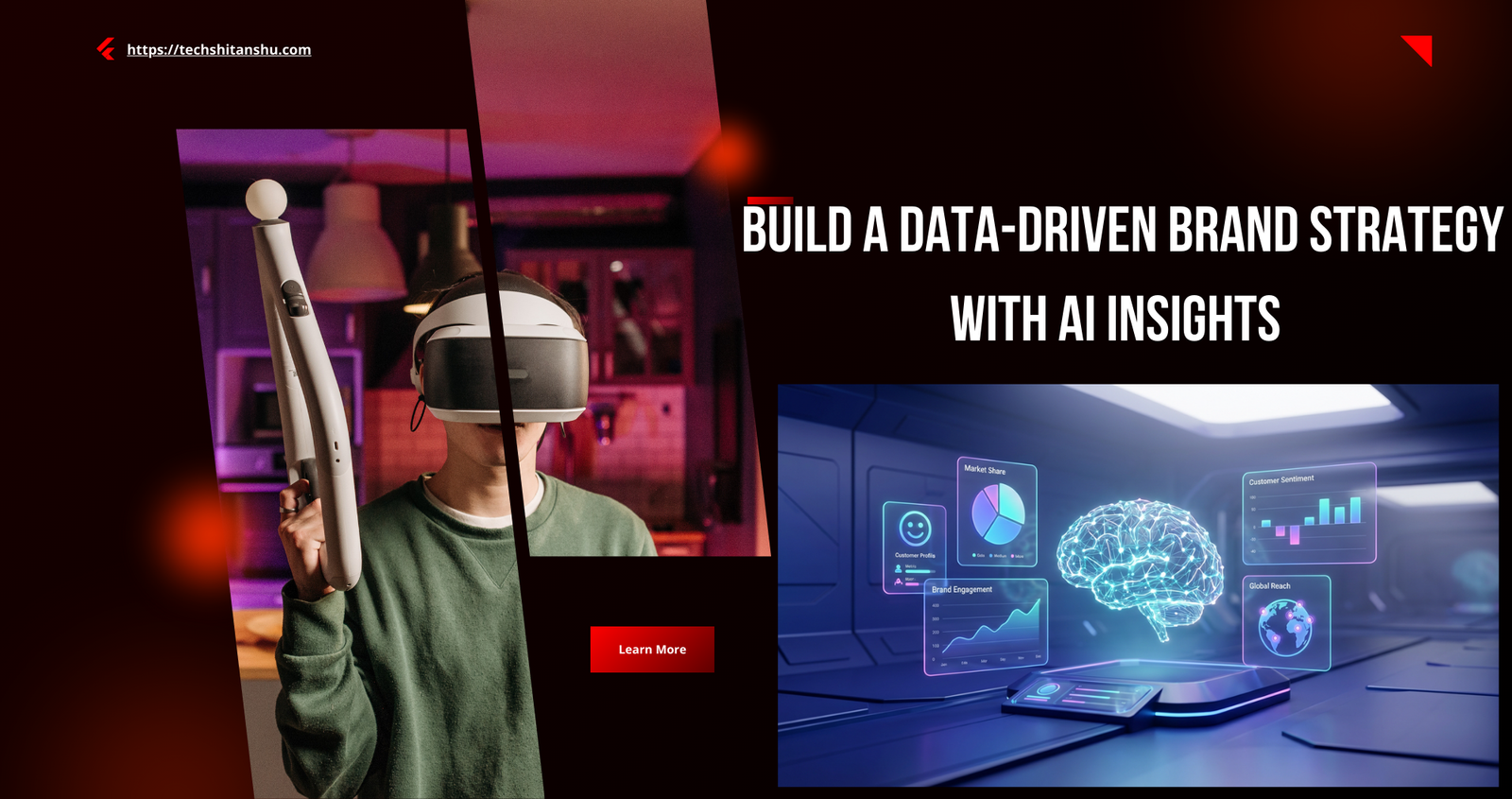
Build a Data-Driven Brand Strategy with AI Insights: A Complete Guide
Branding has changed more in the last 3 years than in the last decade.
Why? AI.
Today, brands no longer grow based on gut feeling, assumptions, or “what worked last year.” The winners in 2025 are the brands that make every branding decision backed by real-time data.
Whether you’re a small business, a growing startup, or a marketer managing multiple brands, one truth is clear:
👉 AI-powered insights are no longer optional — they’re your competitive advantage.
This blog explains how you can build a complete data-driven brand strategy using AI, with step-by-step frameworks, examples, dashboards, KPIs, and tools.
Let’s begin.
What Is a Data-Driven Brand Strategy?
A data-driven brand strategy uses facts, analytics, consumer behavior insights, and performance metrics to shape how your brand communicates, grows, and competes.
Instead of asking:
“What do we think customers want?”
You ask:
“What are customers actually saying, doing, feeling, and searching for?”
AI makes this possible by analyzing:
Social media conversations
Customer reviews
Brand mentions across the web
Search trends
Competitor activities
Market shifts
Sentiment and emotions
Engagement patterns
Content performance
Ad efficiency
Audience demographics
This gives you a 360° view of your brand’s reality, not guesses.
Why AI Is the Backbone of Modern Brand Strategy
AI brings superpowers to brand-building:
Real-time insights
No more waiting for monthly reports. AI analyzes your brand environment 24/7.
Pattern detection
AI identifies trends and brand risks before humans notice.
Predictive analytics
Know what customers want before they ask.
Sentiment + emotional reading
AI can understand customer emotions in comments, reviews, or social posts.
Content optimization
AI tells you what type of messaging performs best across channels.
Competitive intelligence
Compare your brand against top competitors in seconds.
Saves time & cost
Reduces manual research, report creation, and data crunching.
This allows even small businesses to compete on the same level as large brands.
Framework: 7 Steps to Build a Data-Driven Brand Strategy with AI
Here is a simple and effective 7-step model:
Step 1: Define Your Brand Goals (with measurable KPIs)
Start with clarity.
Use AI tools (Notion AI, ChatGPT, Jasper) to refine your goals.
Common brand KPIs include:
Brand awareness (reach, impressions)
Brand sentiment score
Customer satisfaction
Share of voice
Website engagement
Conversions from branded search
Brand consistency score
Content performance metrics
Review ratings & NPS
Cost per brand interaction
Write SMART goals like:
“Increase positive brand sentiment from 62% → 80% in 3 months using AI-based review analysis.”
Step 2: Collect Brand Insights Using AI Tools
Use AI tools to analyze:
Brand mentions (Brandwatch, Meltwater, Hootsuite Insights)
Sentiment analysis (MonkeyLearn, Sprout Social)
Customer reviews (Yelp, Amazon, Google Reviews AI summarizers)
Search queries (Google Trends + AI Keyword Tools)
Competitor strategies (Semrush, SimilarWeb)
Audience behavior (Meta AI Analytics, GA4 insights)
Content performance (YouTube/Instagram/TikTok insights)
These tools reveal:
✔ What people love
✔ What annoys them
✔ Where you are losing customers
✔ Channels that perform best
✔ Untapped opportunities
Step 3: Build Your “Brand Intelligence Dashboard”
Create a simple AI-powered dashboard showing:
Core Sections
Brand sentiment score
Positive vs negative mentions
Trending keywords around your brand
Most engaging posts
Competitor comparison
Top customer complaints
Top customer praises
Brand consistency score
Audience demographics
Conversion behavior
Search visibility
Platforms like Looker Studio, Power BI, or Notion AI dashboards make this easy.
Step 4: Identify Brand Gaps and Opportunities
Using insights, ask:
Are you showing up where customers expect?
Is your messaging aligned with audience sentiment?
Are competitors outperforming you in certain areas?
Is your brand tone consistent across platforms?
Which content formats get the best results?
What emotional triggers make customers respond?
AI highlights gaps humans often miss.
For example:
AI may tell you your competitor’s reels are outperforming your YouTube Shorts, or that your brand posts perform better during weekends, or that customers mention slow checkout often.
These insights shape your action plan.
Step 5: Create AI-Powered Brand Messaging
Use AI to refine your:
Taglines
Brand tone
Value proposition
Social media messaging
Ad copy
Website content
Customer responses
Email tone
AI (ChatGPT, Jasper, Writesonic) can help create multiple versions, test patterns, and identify high-performing structures.
Step 6: Use Predictive Analytics for Future Planning
Use AI to predict:
Future demand
New keywords
Viral trends
Product interest
Seasonal spikes
Competitor risk
Content formats that will dominate
This helps you plan before the market shifts.
Example:
AI shows that “AI branding tools for small business” is a rising topic.
You can create content, reels, blogs, and offers around this early.
Step 7: Measure. Refine. Repeat.
Brand strategy is not one-time.
Use AI to refresh insights every 7–30 days.
Track:
Improvements in sentiment
Brand search volume
Engagement growth
Content performance
ROI from branding activities
Brands that review data regularly grow 8x faster than brands that don’t.
Real Example: How AI Can Transform a Small Business Brand
Let’s say you run a small skincare brand.
AI Insights Show:
Customers love your product quality
But complain about slow customer support
Competitors use influencer reels (you don’t)
Positive sentiment is only 54%
Your product page bounce rate is high
Your nighttime skincare posts perform best
AI-Driven Strategy:
Add AI chatbot to speed customer service
Start short-form video content
Rewrite product page with AI clarity tools
Improve packaging based on review analysis
Post skincare reels after 7 PM
Run sentiment improvement campaigns
Result:
Your brand becomes more discoverable, trustworthy, and customer-focused — all using data.
AI Tools to Build Your Data-Driven Brand Strategy
Brand Monitoring & Sentiment
Brandwatch
Sprout Social
Talkwalker
Meltwater
Hootsuite AI Insights
Content Strategy AI
Jasper
ChatGPT
Copy.ai
SEO & Search Intent
Semrush
Ahrefs
Surfer SEO
Google Trends
Creative & Design AI
Canva AI
Adobe Firefly
Midjourney
Predictive Analytics
IBM Watson
Tableau AI
Power BI AI models
Use 2–3 tools — not all. Simplicity wins.
KPIs to Track for a Data-Driven Brand Strategy
Brand sentiment score
Brand recall
Social media engagement
Share of voice
Conversion from branded keywords
Website authority
Review quantity & positivity
Content efficiency (cost vs reach)
Campaign ROI
Consistency score
Tracking these ensures your brand grows with purpose.
FAQs
1. Why should small businesses use AI for brand strategy?
AI removes guesswork, saves time, and gives real insights into what customers want. It levels the playing field with big brands.
2. Does AI replace human brand managers?
No. AI enhances strategic decisions, but creativity, storytelling, and relationship-building still require humans.
3. What AI tool should beginners start with?
Start with ChatGPT + Google Trends + a brand monitoring tool like Hootsuite Insights.
4. How often should I analyze brand data?
Weekly for fast-growing brands. Bi-weekly or monthly for others.
5. Can AI improve brand customer experience?
Yes. Through chatbots, sentiment reading, personalized messaging, and predictive feedback loops.

Leave a Reply