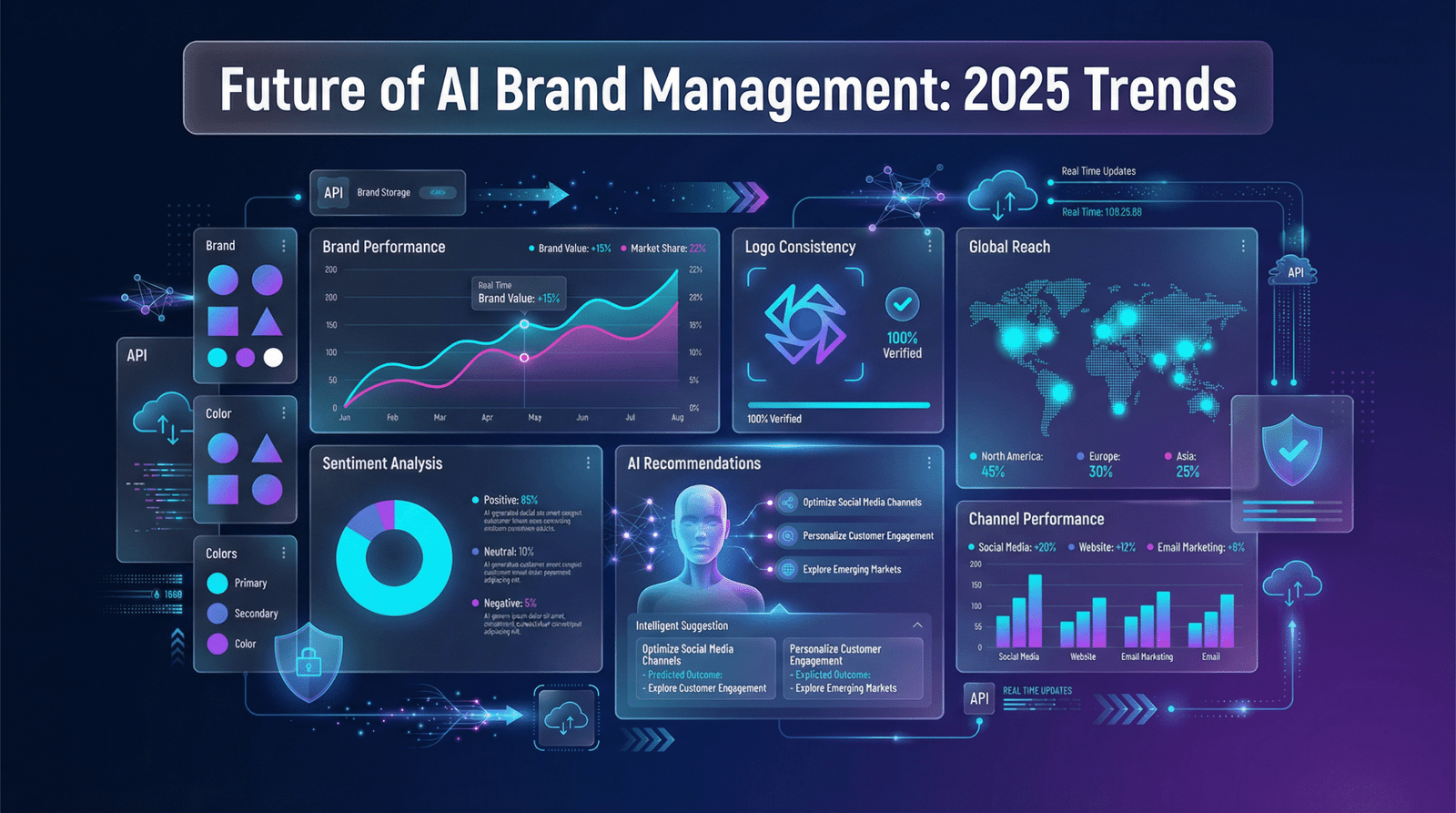
Future of AI Brand Management : 2026 Trends That Will Redefine Branding
In 2026, brand management is no longer just about logos, colors, and taglines. Brands today live across dozens of digital touchpoints—websites, apps, social media, marketplaces, chatbots, emails, and customer support systems. Maintaining a consistent, trustworthy brand across this complex ecosystem has become nearly impossible using manual processes alone.
This is where AI Brand Management steps in.
Artificial Intelligence is transforming how brands are built, governed, monitored, and evolved. In this article, we’ll explore the key AI brand management trends shaping 2026, how they work in practice, and what they mean for businesses, marketers, and technology leaders.
Why AI Brand Management Matters More Than Ever
Modern customers interact with brands in fragmented ways. A single user might:
See a brand on Instagram
Read reviews on Google
Receive an email campaign
Chat with a support bot
Use a mobile app
If these experiences feel inconsistent—different tone, messaging, or promises—trust breaks instantly.
In 2026:
Content volume is exploding
Teams are distributed globally
Personalization is expected by default
Speed matters more than perfection
AI helps brands scale consistency without slowing creativity.
Trend 1: AI-Driven Brand Consistency Systems
One of the biggest trends in 2026 is the rise of AI Brand Consistency Management Systems.
These platforms don’t just store brand assets. They understand brand rules:
Approved logos and variations
Color palettes and typography
Brand voice and tone
Compliance constraints
AI continuously checks:
Social posts
Ads
Emails
Presentations
Customer support responses
If something goes off-brand, the system flags it—or even suggests a better alternative.
➡️ Result: Less brand dilution, faster approvals, fewer mistakes – Future of AI Brand Management
Trend 2: Brand Voice AI Goes Beyond Spell Checks
In 2026, AI doesn’t just correct grammar. It understands brand personality.
Brand voice engines are trained on:
Past campaigns
Style guides
Website copy
Support conversations
They evaluate content for:
Tone (formal, friendly, bold, empathetic)
Vocabulary consistency
Emotional alignment
Cultural sensitivity
AI can now:
Suggest on-brand headlines
Rewrite copy while keeping meaning intact
Help global teams localize content without losing identity
This is especially powerful for multilingual brands.
Trend 3: Predictive Brand Risk & Reputation Monitoring
AI brand management in 2026 is proactive, not reactive.
Using sentiment analysis and pattern detection, AI systems can:
Predict reputational risks
Detect tone drift across regions
Flag campaigns likely to cause backlash
Identify channels where brand inconsistency is rising
Instead of reacting after a crisis, brands can intervene early.
Trend 4: AI-Generated Brand-Safe Content
Generative AI is now deeply integrated into brand systems.
But the key shift in 2026 is brand-safe generation.
AI tools can generate:
Ad creatives
Social captions
Email drafts
Product descriptions
All while respecting:
Brand voice
Legal guidelines
Visual identity rules
This eliminates the fear of “off-brand AI content” and makes AI a trusted creative partner, not a risky shortcut.
Trend 5: Integration with CRM & Martech Platforms
Brand management is no longer isolated.
In 2026, AI brand systems integrate directly with:
CRMs
Marketing automation tools
CMS platforms
Customer support systems
This ensures:
Sales emails stay on-brand
Support responses match brand tone
Personalized offers still feel consistent
Customer journeys feel unified
Brand identity becomes part of customer experience, not just marketing.
Trend 6: Data-Driven Brand Strategy Decisions
AI transforms brand management from intuition-based to evidence-based.
Using analytics, brands can now:
Measure consistency across channels
Correlate brand tone with conversion rates
Track trust and sentiment trends
Optimize messaging using real performance data
This connects brand strategy directly to business outcomes like retention, loyalty, and revenue.
Real-World Use Cases
Enterprise Brands
Global brand governance across regions
Automated compliance checks
Faster campaign launches
Startups & Scaleups
Professional branding without large teams
AI-assisted messaging
Faster go-to-market
B2B Companies
Consistent thought leadership
Sales enablement content that stays on-brand
Stronger trust in long sales cycles
Governance, Ethics & Human Oversight
Despite AI’s power, human control remains essential.
Best practices in 2026 include:
Clear approval thresholds
Logged AI decisions
Human review for high-risk content
Ethical guidelines for AI usage
The goal is augmentation, not replacement.
What Comes Next Beyond 2026?
Looking ahead, AI brand management will evolve toward:
Real-time adaptive branding
AR/VR brand experiences
Emotion-aware brand interactions
Deeper links between brand trust and revenue metrics
Brand consistency will move from a “nice-to-have” to a measurable growth lever.
Final Thoughts
The future of AI brand management in 2026 is about clarity, consistency, and trust at scale.
Brands that adopt AI thoughtfully will:
Move faster
Reduce risk
Build stronger emotional connections
Stay recognizable everywhere customers interact
Those that don’t risk becoming fragmented, forgettable, and untrustworthy in an AI-accelerated world.

Leave a Reply